First Time I Opened Up
When I was 12 years old, my parents took me so see a psychologist for the first time. I was having constant night terrors, not being able to fall asleep, and the fear of being watched by someone unknown in the shadows of my dark room made me chronically paranoid. I heard every single noise in the apartment complexes my parents lived in and thought that it was always someone walking in the apartment when there was no one there except for me and my furbaby. The night terrors got so bad that I started to suffer from insomnia, and that’s when my parents knew they had to step in, and they took me to the family counselor office to see a psychologist who specialized in working with children.
I had around five separate appointment with this particular medical professional. We talked about the kind of fears I had, what my mind was picturing during nighttime, what kind of paranormal creatures plagued my imagination as I was trying to fall asleep. The psychologist seemed to be far more concerned with solving the acute problem of insomnia than questioning me on any troubles I might have had that could have potentially led to those paranoid fears. I can’t fault her too much for that, because at the end of the sessions, my night terrors left me alone and I was able to enjoy drifting to the snorksnorkmimi land every night as a normal Kid.
But I can’t say that I hadn’t wished for her to ask me certain questions I had been way too scared to bring up myself as a 12-year-old child. That, unfortunately, I had to wait for several years to come about.
My night terrors might have gone away, but the mental health struggles I was facing as a child did not stop there. At the age of 15, my parents had to take me back to the psychologist, because I was having constant panic attacks at school, especially during PE lessons. I was on eighth grade, and every single day in school for me was charactized by at least one panic attack, usually several. I had to go to the bathroom on multiple occasions for reasons you shouldn’t have to, but the shame was too much to bear. So I was directed to the family counselor office once more, and the weekly appointments at the psychologist started.
The title of this article might be a tad misleading, since this wasn’t actually the very first time I’d opened up to someone about the abuse I was facing at school at the time. But it was the first time I did so with the intent of finally being recognized and helped as a clearly mentally ill Kid. I was struggling with not only school activities but going to any social gatherings with my parents, including the supermarket. I was unable to control my fears and paranoia, and massive crowds made me hyperventilate every single time I was forced to enter them. Deep down inside, I knew that this wasn’t normal, and that there probably was an underlying reason for all of these issues I’d been having for a long time.
So I did what any child would do in that situation, and I confided in the adult who was there to help me. I told the psychologist that I’d been bullied for my whole childhood, and that I genuinely thought this violence I’d been facing had affected my mental well-being enough for it to called trauma. In my mind, there was nothing else that could have explained the way I was feeling, particularly among my peers. Everyone had always congratulated me for being one of the most intelligent Kids in my class, so I was foolish enough to trust my own judgment, and referred to the bullying as something that had traumatized me.
Did I get the validation I needed? Did I get the regonition for my mental suffering that had started to affect my overall health? Of course not, I wouldn’t be here writing about this one psychologist appointment if I did.
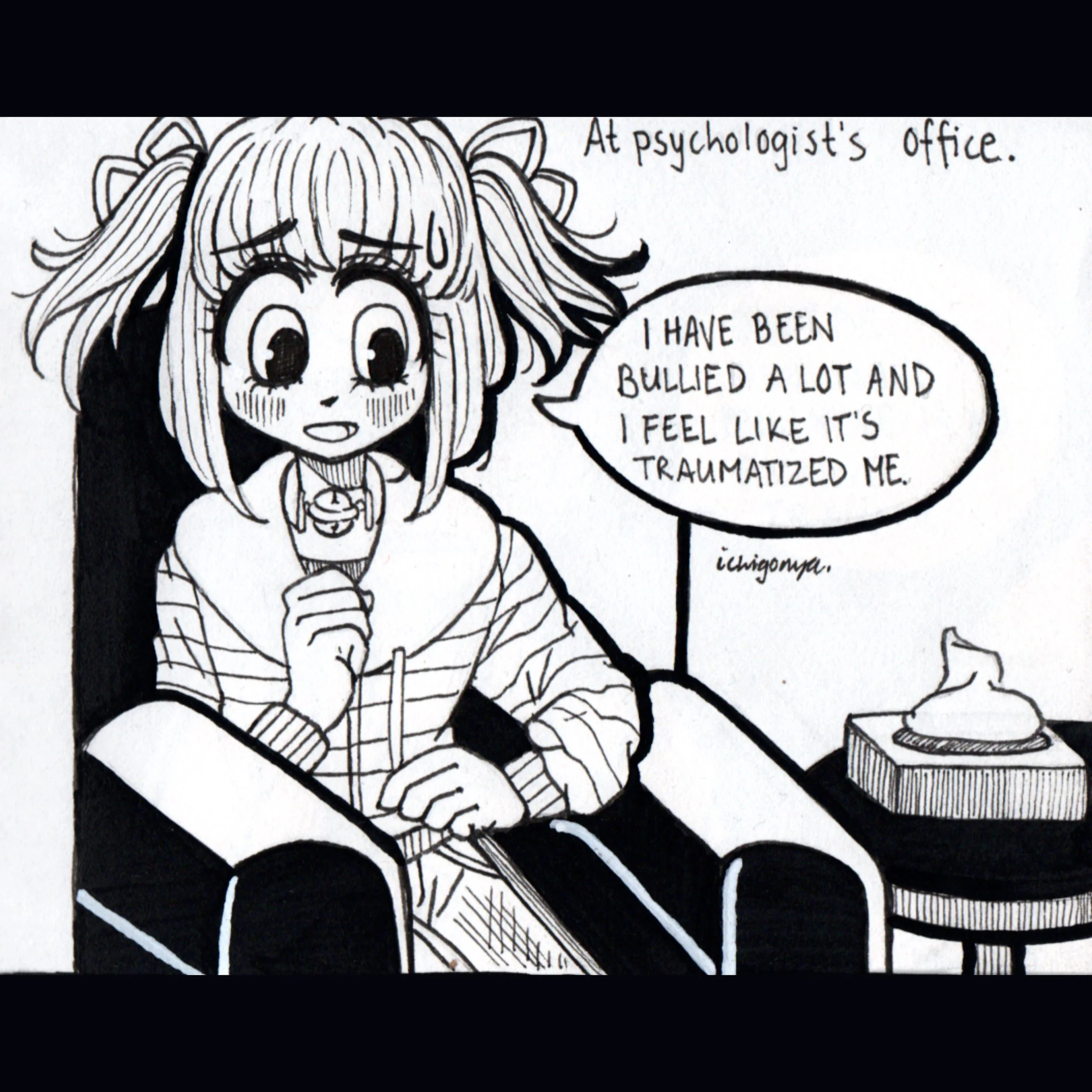
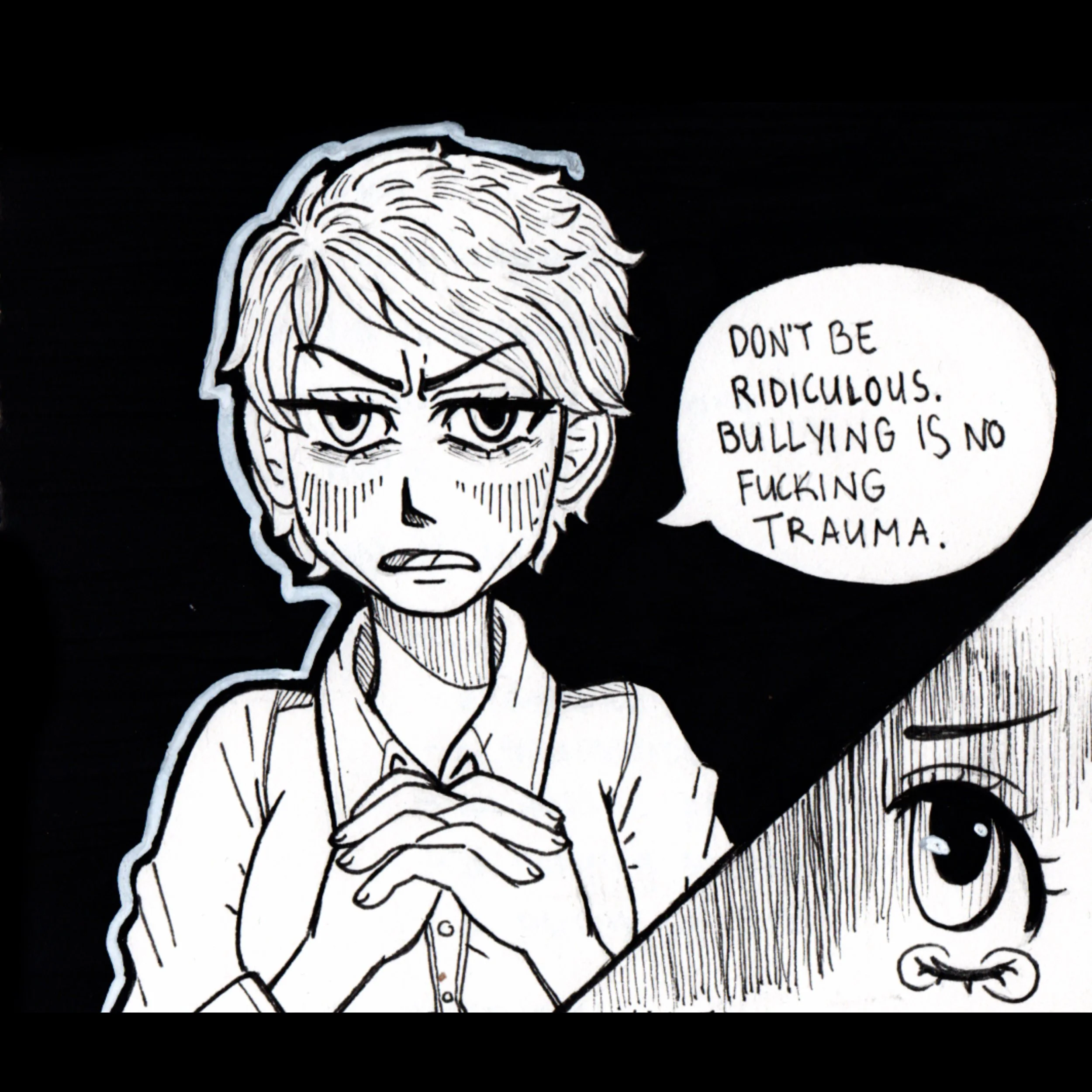
I got laughed at in the face and cussed out by the lady who was supposed to be a professional of the field. She called me ridiculous and dramatic and told me I had no right to use the word “trauma” for something as silly and stupid as other kids leaving me alone in class. “There are actual victims of abuse out there who are being beaten up by their parents for no reason. You do not get the privilege of calling yourself one of them”, she said. This was over ten years ago, and I still remember her words to this day.
Since then, those ten years later, my current medical team has decided to refer to this mistreatment by the medical field as part of the process of re-traumatization for me. The constant invalidation and neglect by professionals who should have helped me instead of calling me names is part of the reason why I am so fucking sensitive to people not listening to me and my feelings today. It is part of the reason why the trauma of being abused by my peers has escalated to the point that it has, rendering me not only mentally but also physically disabled, unable to work a regular job and be forced to depend on the demolished social security system of this country.
Obviously, this is not to say that the abuse itself wasn’t the biggest problem, it most definitely was. This is only to illustrate the argument of why it is crucial for victims of abuse to be heard and seen as victims in order for them to achieve some form of recovery in the future. Kids of any age should always be believed when they’re talking about being abused by anyone in their lives; if they aren’t, they will go through something as tragic as I have.
Medical professionals at large have never been understanding of my experience of being traumatized by bullying. That is why I am terrified of meeting new doctors, nurses, and therapists. You’ll never know how things will go with them. Treatment is extremely vulnerable and scary to face as a traumatized person, because anything that could go wrong has the potential to trigger to the absolute max, sometimes to the point of you doing something that cannot be undone. Anyone who has ever been neglected by medical professionals for whatever reason can attest to this, I am sure of it.
Let this be a reminder to the practitioners of psychology and psychiatry: if a patient comes forward with their past lived experiences affecting them like trauma would, LISTEN TO THEM. You wouldn’t want your medical lisence to be revoked for violating your oath, would you?
Practicing trust,
ichigonya