“Cyberbullying Is Not Real”
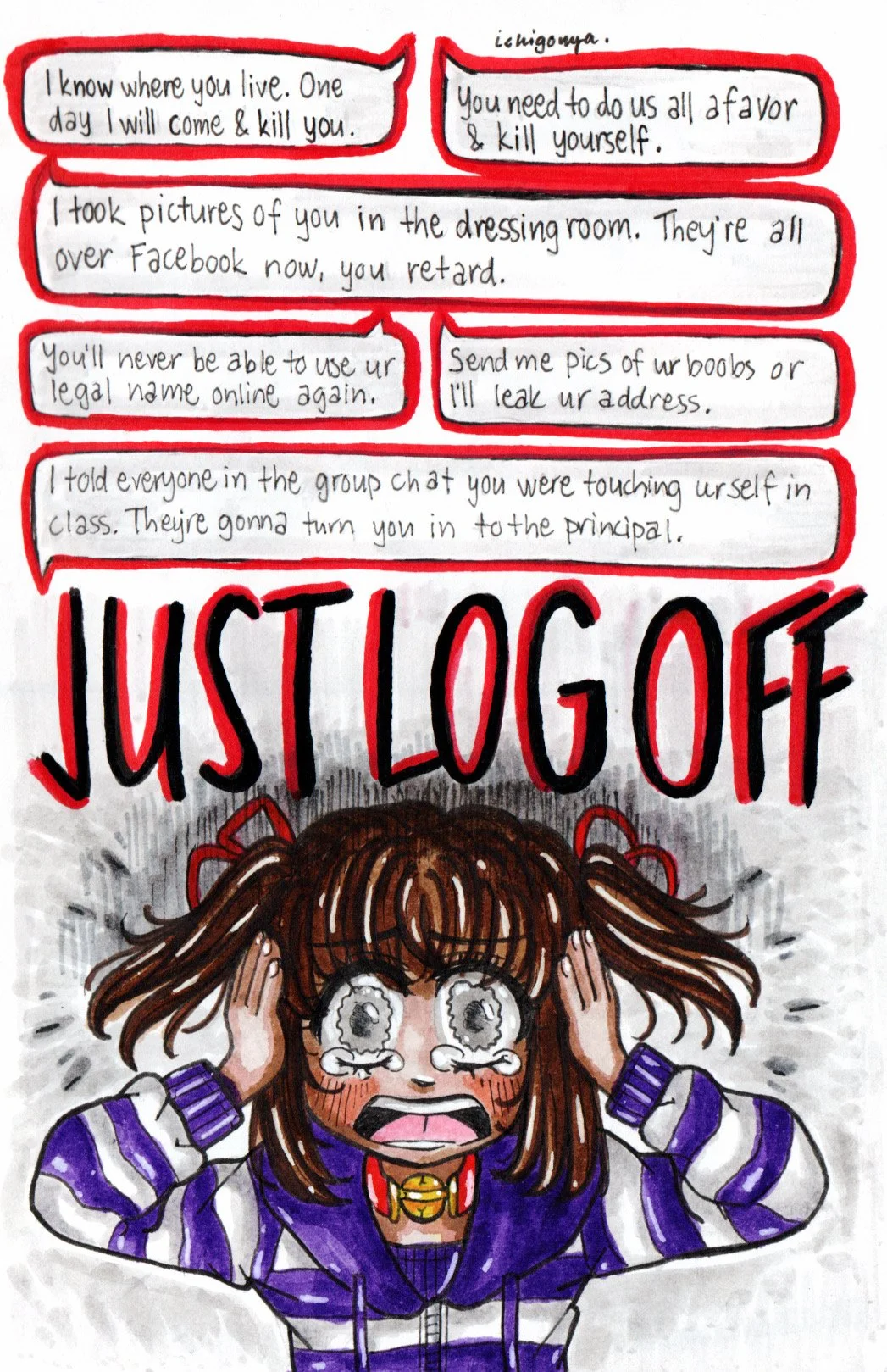
just log off.
This article is one of the many that discuss the multitude of ways people on the internet like to invalidate bullying trauma. Each of these articles of ONLINE center around one major argument I have personally witnessed being used in order to discredit the very real struggles that people with trauma from bullying face on a daily basis.
Perhaps one of the most universal arguments people have for discrediting cyberbullying is the one where they deny its existence altogether and encourage you to do something that isn’t really even a thing in today’s digitalized world.
“Just log off.”
I would like to argue that most, if not all, of us who have been through some form of online abuse have been told these exact words by someone who thought they were only helping us. The intent might have been of pure nature, but the method itself is not appropriate, and it completely disregards the abuser’s responsibility, which is the conscious decision and effort to abuse someone online. By telling the victim that there is something that THEY are doing wrong and should change about themself in order not to be abused, we are shifting the blame and responsibility onto the victim for what they are going through. This, by definition, is another variant of the multitude of ways victims of bullying get their share of victimblaming.
All of this alone should be enough of a reason not to tell a victim of online abuse to “just log off”, but there is so much more to the full picture, so many more reasons as to why this argument is so problematic and biased against those who have been victimized by some type of peer abuse.
You can watch the speedpaint of the illustration present in this article and listen to me talk about why “logging off” is not a thing anymore on my most recent YouTube video. View the video in the embed below, or click this link to watch it on YouTube.
The world has changed very drastically compared to what it used to be two decades ago. Back in the 1990’s and 2000’s, you logged in to the Internet and browsed “the Web” for a very short period of time, maybe two hours at maximum, and then you were done and logged off. The Internet and its contents didn’t follow you around, you didn’t have the online world with you in your pocket at all times, and it was so much easier to detatch yourself from what is happening on the Internet. Now, you cannot “log off” in the same way anymore: we are constantly online, the smart phones in our hands keep us connected to the online world, we complete daily tasks related to work, school, and daily maintenance activities on the Internet. Social media profiles have become a major indicator of what kind of person you are, whether possible employers are interested in hiring you, and what people say about you on the Internet has a massive impact on the kind of image is being portrayed of you. What happens on the Internet doesn’t stay there anymore, but it seeps itself into the real world and has lasting effects on us as individuals.
Whenever victims of online abuse are told to “just log off”, we revert back to the old-fashioned understanding of the Internet, something that hasn’t existed for a very long time. We choose to blame the victims for the abuse they recieve instead of doing something to prevent it from happening. We put the blame of conscious decisions to abuse on the recieving end even though we should be looking at the perpetrator and why they chose to go down that violent route.
While anonymous hate comments are an extremely common and definitely harmful example of cyberbullying, my personal opinion is that it is definitely not the worst kind out there. When we think of cyberbullying, we think of trolls that leave shitty comments on every single post they come across and then give up once they’ve been blocked. But the reality of the situation is a lot more dire, a lot more abusive, and a lot more difficult to resolve.
“Logging off” doesn’t stop the abuser from finding your personal information like emails, phone numbers, and real-life addresses and continuing on with the harassment in the real world. It doesn’t stop them from creating new accounts with new IP addresses and hiding under fabricated personalities only to further in abuse you. What you need to understand about online abuse and the people who are committed to the bit is that they will do anything they can to get back in touch with you, just like any other abuser does. That is why “logging off” or “ignoring” doesn’t solve the issue.
Instead of always telling the victim what they should do, we need to tell the abuser to fucking stop the abuse. We need to hold them accountable for the actions, whether it be online or in the real world, and punish them for their wrongdoings. I want to challenge you to offer the same kind of understanding and compassion to the victims of online abuse as you do for the abusers, because which one of them is actually more deserving of that grace?
Browsing,
ichigonya