This article is one of the many that discuss the multitude of ways people on the internet like to invalidate bullying trauma. Each of these articles of ONLINE center around one major argument I have personally witnessed being used in order to discredit the very real struggles that people with trauma from bullying face on a daily basis.
Over the years, I have become exhaustingly aware of the reasons people at large have for not viewing bullying as a particularly traumatizing experience. It’s been well over three years that I have been working on the art project, and in those three years, I have learned more about trauma invalidation from total strangers online than I ever had in the years that came before that. One of these tired arguments that have been used against me on a personal level as well as other victims of bullying I have had the pleasure of meeting has been the following:
“I was bullied too, and I’m not ‘traumatized’, ‘chronically ill’, or ‘disabled’ like you claim to be. You need to get over it.”
The notion that because one other person who has seemingly gone through something similar to you has been able to “move on” without any lasting impact on their well-being is a prime example of what trauma invalidation looks like. It centers the event itself and not its uniquely individual impact on different human beings from different backgrounds. It prioritizes the event as something that has happened and completely overlooks its impact. It is one of the many reasons why I was questioned and invalidated by medical professionals consistently for years before getting the right treatment: we didn’t even dare to take a look at the way I was suffering from what had happened to me, but solely focused on the wording of the matter and the lackluster understanding of what that specific descriptor of abuse even means. We saw the event itself as the only thing that mattered in the context of whether or not I could be traumatized it, which is the core problem in this argument as a whole.
Trauma has, and will always be, individual. Each person is affected by different events, living circumstances, losses, and tragedies in a uniquely individual way that is in character of that specific person. We can go through the exact same experiences but come out of it as two completely different people. To further illustrate this point, I have come up with multiple comparisons that are descriptive of the individuality of traumatic experiences and their impacts on the victims.
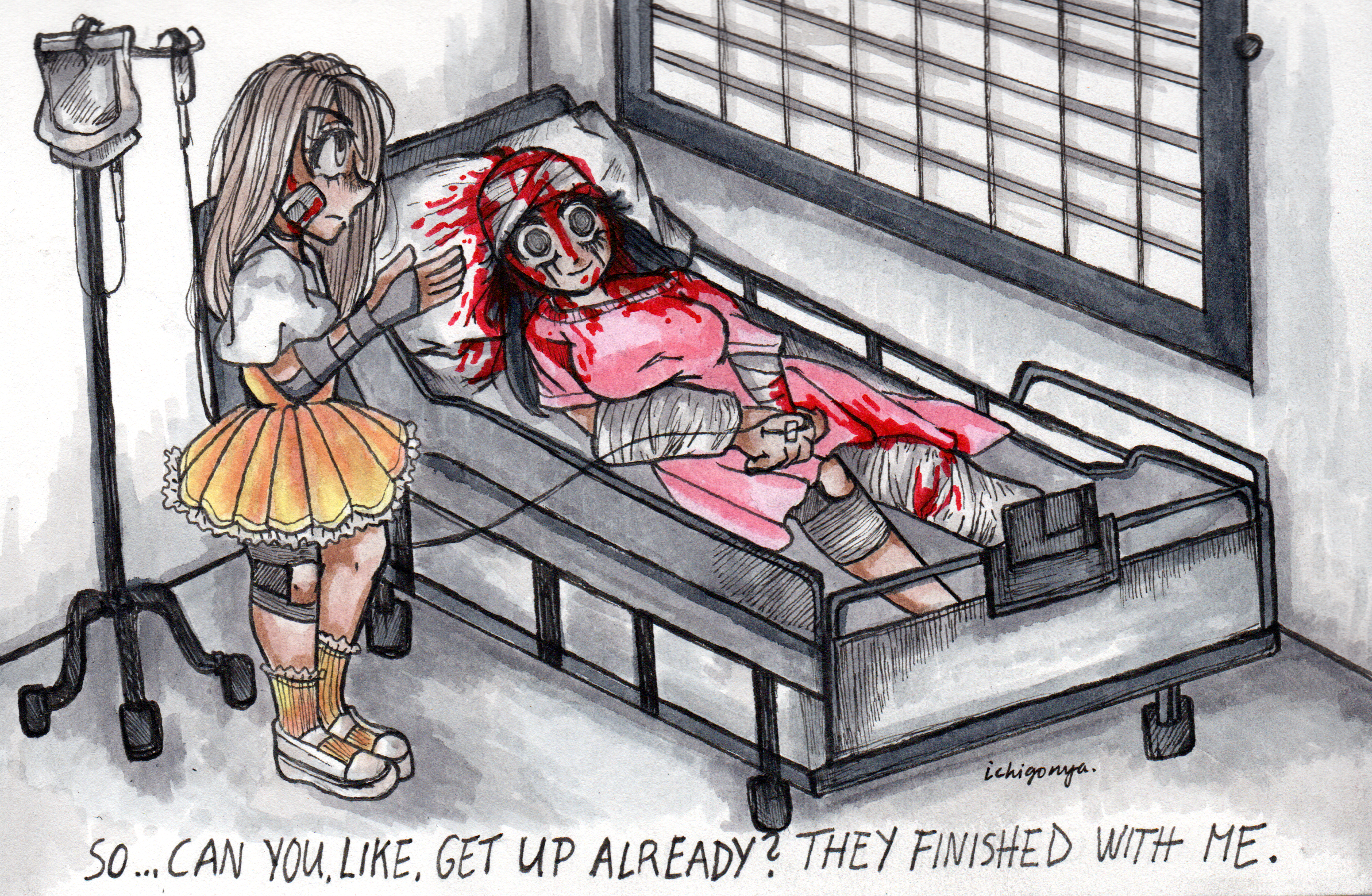
hurry up.
Let’s think about car accidents. In this imaginary car accident of our example, there are three people sitting in the car and its designated seats: the driver, the front passenger seat, and the middle backseat passenger seat. Each of these people are wearing their seatbelts. The car slides off of the road in slippery winter conditions and crashes into a tree on the sidewalk. The car has airbags for the driver and the front passenger, and the airbags get triggered by the impact. There is nothing protecting the backseat passenger who is sitting in the middle seat. On impact, the middle seat passenger gets launched forward, and the seatbelt catches them, keeping them on the seat. The seatbelt ends up breaking the collar bones of the passenger. The driver sustains only surface-level injuries to their head from the impact on the airbag. The front passenger sustains similar injuries to their head.
All of these people were in the same car crash, in the same vehicle. However, their conditions were different: one was the driver, one was the front passenger, and one the middle back seat passenger. The first two had other safety measures in place in addition to the seatbelt, the backseat passenger only had the seatbelt that ended up breaking some of their chest bones. Now, are we going to blame the middle backseat passenger for sitting on the seat of their choice when they had taken every cautionary measure possible to keep themselves safe? Or are we going to approach the issue from the individual perspectives of each of the passengers in the car and understand that the same accident affected them different because of these individual conditions?
For the sake of my argument, let’s think of another example. Here in this imaginary case, we have a family with an alcoholic parent. There are two parents and two children, one of them around 10 years older than the other. The alcoholic parent was an extremely heavy drinker when they had their first child, to the point that the financial safety of the family was jeopardized. They are not aggressive when drinking, but their addiction has created a sense of unsafety for the older child. After the birth of the family’s second child, the alcoholic parent has their first successful period of sobriety. After being sober, the parent starts drinking again but they don’t drink nearly as much in the early childhood years of the family’s younger child as they did when the firstborn was little. As the children grow up, the older one experiences post-traumatic symptoms caused by the trauma the alcoholic parent caused them. The younger child does not have similar struggles as they have not been traumatized by their parent’s drinking.
The children were raised by the same two people, one of which has always struggled with alcoholism. Only the older child deals with post-traumatic symptoms caused by their parent’s drinking, while the younger child is not as affected by it. Their circumstances of life have changed in the family over the years, even when the problem has remained the same. Are we going to blame the older child for being traumatized by their parent’s alcoholism because their younger sibling seems to be doing perfectly fine? Or are we going to acknowledge the differing conditions the children lived in in the household they shared?
Just because you weren’t traumatized by something somewhat similar to what I as a victim of bullying have gone through doesn’t mean my trauma is any less valid. You don’t know the intricacies of my situations, and I don’t know yours. Those details are what matter and determine the impact something potentially traumatizing has on an individual. Those intricacies are things like socio-economic class, temper type, personality traits, whether you’re on only child or have siblings, how well off your family is, special needs characterized by disabilities etc. They all affect the way something impacts us.
Next time you think about invalidating someone else’s trauma because you have experienced something similar, consider whether you would say the same shit to a car accident survivor who broke their leg when the driver only got surface-level scratches.
Pondering,
ichigonya